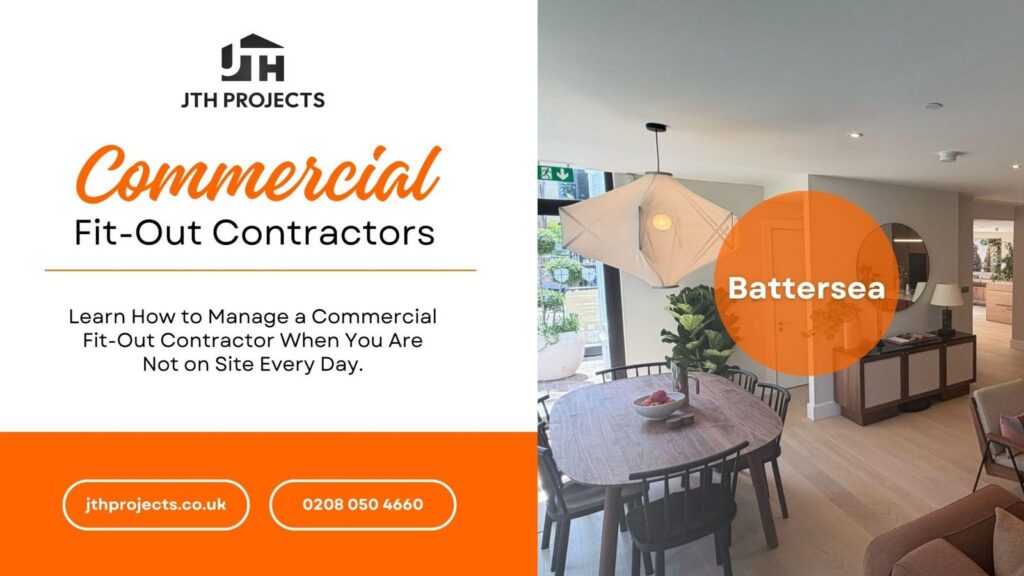
Managing a commercial fit-out from a distance is one of the more common challenges developers and commercial clients in Battersea and across London face. You have a business to run, other projects to oversee, or simply cannot be present on site every day. That does not mean the project has to run without direction. What it does mean is that the way you set up the relationship with your contractor, from the very first conversation, will determine how much control you retain when you are not physically there.
Set the Reporting Structure Before Work Starts
One of the most practical steps you can take before a project begins is to agree on how you will communicate progress. The reporting format should be resolved at the briefing stage, not after work is underway. A professional commercial fit-out contractor will raise these issues proactively, offering a clear framework for regular updates that includes photographs, programme notes, and any issues requiring your attention. Vagueness on this point at the outset is a reliable indicator of how communication will be handled throughout.
In active development environments such as Battersea and Nine Elms, where multiple trades operate concurrently and programme milestones are fixed, a structured reporting arrangement gives you reliable visibility over the project without requiring your daily presence on site.
Agree on a Single Point of Contact
Multi-trade fit-out projects involve a considerable number of moving parts. Electricians, joiners, decorators, M&E contractors, and finishing teams are all on site at different stages, each with their own programme and requirements. If you are not present to coordinate in person, you need one named individual on the contractor’s side who is accountable for everything happening on site. On a well managed commercial fit-out, this is typically the site manager or project manager, and their primary responsibility is to act as your direct point of contact when you cannot be there yourself.
Establish early who that person is, how to reach them, and what decisions they are authorised to make without escalating to you. This clarity reduces delays, prevents queries from sitting unanswered, and gives you confidence that the project is being actively managed at all times.
Use the Programme as Your Management Tool
Every commercial fit-out should begin with a detailed programme that breaks the project into phases, milestones, and key dates. This is not just a planning document. It is the reference point against which everything is measured throughout the build. When you cannot be on site, the programme tells you whether the project is on track or not.
Review the programme regularly in line with the contractor’s progress updates. If a milestone is missed, ask for the cause and the recovery plan in writing. For interior fit-out projects in live development environments, where launch dates and handover deadlines are often fixed, early visibility of slippage allows you to address it before it becomes a problem.
Make Key Decisions Promptly
One of the most common causes of delay on any commercial fit-out in Battersea is slow decision-making from the client side. When you are not on site, queries can sit unanswered for longer than they should, and on a project where trades are sequenced tightly, even a short delay in one area can have a knock-on effect across the programme. Materials need approval, design details need confirming, and variations need sign-off. A professional contractor will flag these clearly and give you a reasonable deadline for each decision. Your responsibility is to respond within that window.
If you know in advance that your availability will be limited during certain phases of the project, communicate that to your contractor early. An experienced team can sequence the work and consolidate pending decisions to reduce the number of interruptions, which keeps the programme moving and limits the risk of avoidable delays building up over time.
Visit at the Right Stages, Not Every Day
You do not need to be on site every day, but there are specific points in a commercial fit-out where a visit makes a real difference. The end of the first fix, before the second fix begins, is one of the most important. This is when services are in place, but walls are not yet closed, so any issues with routing or positioning can still be addressed without costly remedial work. Other key visit points include practical completion, snagging, and handover.
Planning your site visits around these stages rather than making ad hoc appearances gives each visit a clear purpose and ensures you are reviewing the project at the moments when your input has the most impact.
Managing Your Commercial Fit-Out Well Starts With the Right Contractor
None of the above works if the contractor is not the right fit from the outset. At JTH Projects, we act as the Principal Contractor for commercial fit-out projects across London and Surrey. Our expertise includes commercial fit-out services in Battersea and across the wider Nine Elms development zone, working with developers and commercial clients on sales suites, amenity spaces, offices, and shell and core fit-outs. At JTH Projects, we manage commercial fit-out projects through structured planning, clear communication and regular progress updates. Project management responsibilities, reporting arrangements and points of contact are agreed according to the requirements of each project.
If you have an upcoming commercial fit-out project in Battersea or elsewhere in London, including Lambeth, Merton and Richmond, and want to discuss how we manage the process, get in touch through our contact page.
FAQs
How often should a commercial fit-out contractor update me on progress?
At a minimum, weekly written updates with photographs and programme notes. For fast-moving projects or those with fixed launch dates, daily updates during critical phases are advisable.
What should a commercial fit-out progress report include?
Work completed in the period, upcoming activities, any outstanding decisions required from you, flagged risks or delays, and updated programme notes where relevant.
How do I know if my commercial fit-out is falling behind schedule?
Compare the contractor’s progress updates against the agreed programme milestones. If activities are running later than planned and no recovery plan has been provided, raise it in writing immediately.
What decisions should I expect to make during a commercial fit-out?
Material and finish approvals, design queries, variations to the original scope, and sign-off on key stages such as first fix completion and snagging. Having a clear process for these keeps the project moving.
What is the most important site visit during a commercial fit-out?
The end of the first fix, before the second fix begins. This is when services and structure are exposed, and any issues can still be corrected without significant disruption or cost.