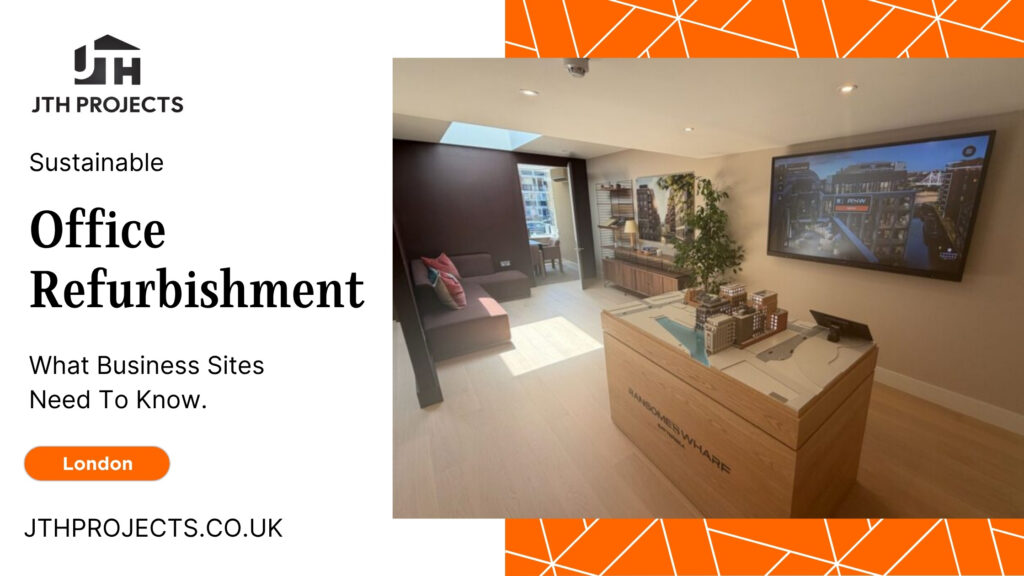
More businesses in London are overhauling their offices with sustainability in mind, and it’s not hard to see why. Sustainable office refurbishment can help reduce running costs, support staff wellbeing, and show clients that your company takes its responsibilities seriously. At JTH Projects, we handle office refurbishment in London with a focus on quality workmanship and responsible practices, helping you create a workspace that performs well while using resources more efficiently.
Why Sustainable Office Refurbishment Is Worth Getting Right
Pressure on London businesses to go greener is coming from every direction. Clients ask about it. Job candidates factor it in. And with energy prices remaining a significant business expense, the financial case for a more efficient office can be compelling.
A well-planned sustainable office refurbishment goes beyond swapping bulbs. It looks at how the whole space functions: what it’s built from, how it’s heated, how waste gets handled, and whether the layout actually works for the people using it.
What a Sustainable Fit-Out Looks Like in Practice
Energy Efficiency: Better insulation, LED lighting, and smart heating controls can help reduce energy consumption and running costs. The potential savings and payback period will depend on the building, existing systems, energy usage, and scope of the refurbishment.
Material Choices: Responsibly sourced timber, recycled materials, and low-VOC finishes can reduce the environmental impact of the build itself. Low-VOC products can also support better indoor air quality when specified and installed appropriately.
Waste Management: Good contractors plan for waste before work begins. Materials can be sorted, reused where possible, and diverted from landfill where suitable recycling or recovery facilities are available. Building waste management into the project from the start makes this process more effective.
Smart Use of Space: Efficient space planning can help businesses make better use of natural light, heating, and existing facilities. Flexible workstations and well-planned zones can also allow the office to adapt as the needs of the business change.
Built to Last: Cutting corners on materials or workmanship can lead to repairs, replacements, and unnecessary waste further down the line. Durable materials and quality workmanship can help extend the lifespan of the refurbishment and reduce the need for premature replacement.
Choosing the Right Contractor for Office Refurbishment in London
The contractor you choose can have a significant impact on how smoothly the project runs. For office refurbishment in London, you want a team that asks the right questions upfront, keeps you informed throughout, and understands how to minimise disruption while the work is underway.
At JTH Projects, we start every commercial project with a proper consultation. We scope the work clearly, identify potential sources of disruption, and establish a realistic programme based on the requirements of the project.
Frequently Asked Questions
Q1: How long does an office refurbishment in London typically take?
Smaller projects can take around two to four weeks. Larger projects, where you’re reconfiguring an entire floor or working across multiple rooms, can take two to three months or longer depending on the scope. We’ll establish a realistic timeline based on your project requirements.
Q2: Do I need planning permission?
Many internal refurbishment projects do not require a planning application, but this depends on the property and the proposed works. Structural changes, external alterations, listed buildings, and certain other circumstances may require additional permissions or approvals. We’ll discuss the relevant requirements during the consultation.
Q3: What does sustainable office refurbishment cost in London?
There’s no single answer because scope and specification vary significantly between projects. Sustainable materials and energy-efficiency measures can affect the upfront cost, while potential savings in energy consumption and maintenance may contribute to the longer-term value of the investment. We provide free, no-obligation quotes so you know what the proposed work involves before making a commitment.
Q4: Can the office stay open during the works?
Yes, this can be possible for lighter refurbishments. For more involved works, a phased approach may help minimise disruption. We’ll discuss the available options with you and plan the works around the practical needs of your team and business.
Q5: What’s the difference between a fit-out and a refurbishment?
A fit-out typically starts with an empty or unfinished space and turns it into a working office. A refurbishment updates an existing workspace, whether that’s the layout, finishes, lighting, heating system, or other elements. Both require careful planning and skilled delivery to achieve the desired result.